
By Jacob Hardison – Adrenaline RC Racing
If you’re chasing performance and fine-tuning your RC car setup, you’ve probably heard the term bump steer. But what exactly is it, and how does it impact the handling of your vehicle? In today’s blog, we’re breaking it all down—from what bump steer looks like in action to how you can tweak it for your specific track conditions.
What Is Bump Steer?
Bump steer refers to changes in your front wheel toe angle as the suspension compresses. When your car brakes or hits a bump, the front end compresses—and depending on your setup, your tires may toe in or out during that suspension stroke. This subtle geometry shift has a major effect on steering response and overall handling.
Visualizing Bump Steer
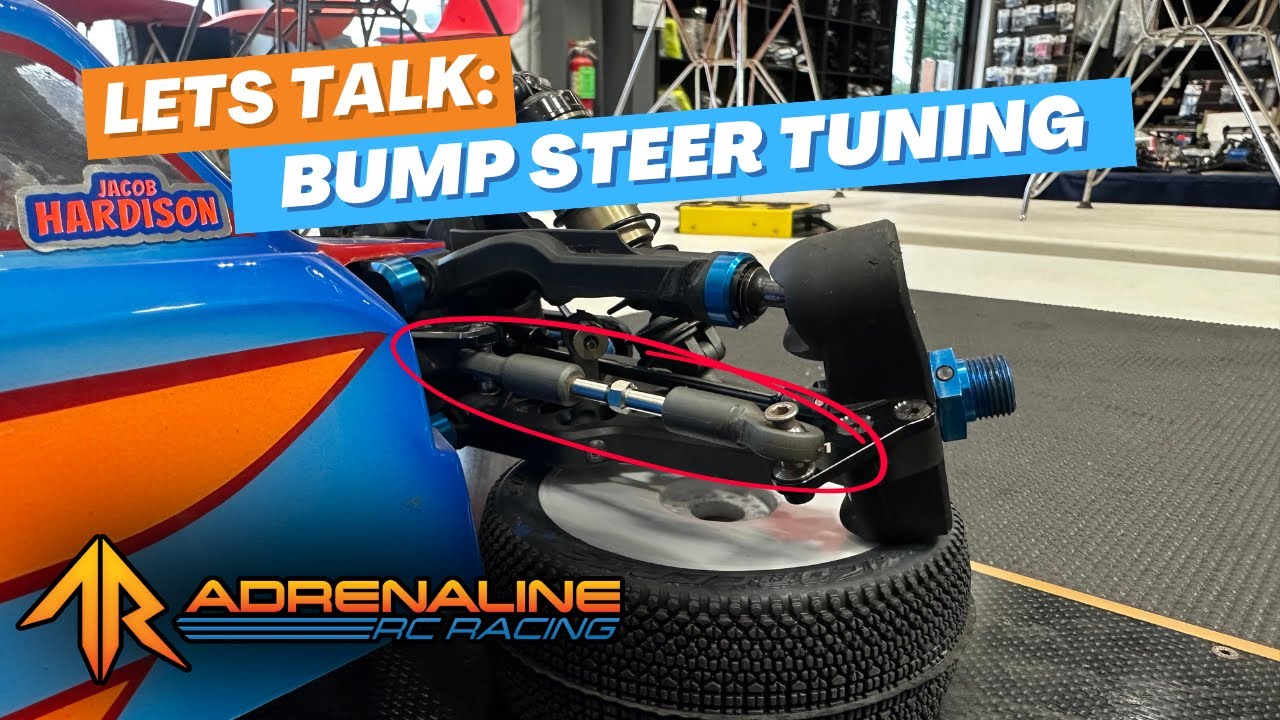
Let’s take a closer look at the Associated E-Buggy to demonstrate how bump steer works. By removing the upper arm shims, we can change the caster and visually observe the effects on bump steer.
-
With the arm pushed forward (raising the steering link), compressing the suspension causes the wheels to toe out—this is bump out.
-
With the arm pulled back (lowering the steering link), compressing the suspension results in the wheels staying more neutral—or even toeing in, known as bump in.
🔧 Pro Tip: Even small adjustments to your upper arm position can affect bump steer. Caster adjustments, kickup changes, and steering block swaps can all impact the angle of your steering link.
What Affects Bump Steer?
The primary factor in bump steer is the angle of the steering link. This angle can change depending on:
-
Upper arm shim position (affects caster)
-
Washer placement on the steering link (raising or lowering it)
-
Changes in caster or kickup
-
Front hub and knuckle geometry
These geometry tweaks might not be done specifically for bump steer, but it’s critical to check your steering link angle any time you adjust caster or other front-end settings.
Bump Out vs. Bump In – What You’ll Feel on Track
Here’s how bump steer affects handling during real-world driving:
🔹 More Bump Out (Toe Out Under Compression):
-
Smoother mid-corner steering
-
Easier to arc sweeping turns
-
Reduces twitchiness over bumps
-
Great for choppy or bumpy tracks
🔹 More Bump In (Toe In Under Compression):
-
Increased mid-corner steering
-
Can scrub speed in tighter corners
-
Feels more aggressive and responsive
-
Better suited for smooth, high-grip tracks
Why It Matters
Bump steer tuning might not be as obvious as shock oils or spring rates, but its influence on your car’s predictability and control is huge—especially in mid-corner behavior. If your car feels too twitchy or not responsive enough in certain corners, a bump steer adjustment might be the fix.
Final Thoughts
Dialing in bump steer is one of those "next-level" tuning options that can really elevate your performance once you’re comfortable with the basics. Don’t be afraid to experiment on the bench—compress your suspension and observe the toe change. Every car reacts a little differently, so learning how your rig behaves is the key.
Have questions or want a written setup guide? Drop a comment on our YouTube video or send us a message! And don’t forget—if you have requests for future tech breakdowns, we want to hear them.
Thanks for tuning in! See you next week with another RC tech tip from Adrenaline RC Racing.