
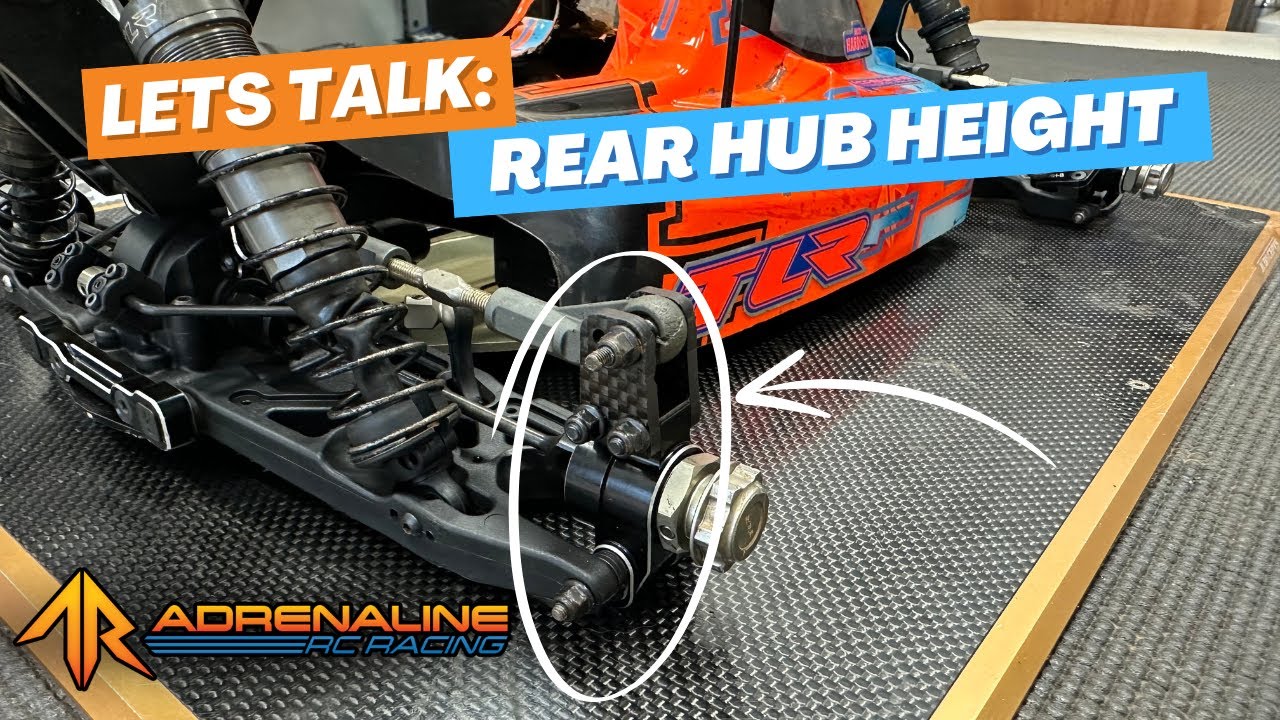
When it comes to fine-tuning your RC car’s handling, small adjustments can make a big difference. Last week, we covered rear camber link tuning and how changing those positions affects your roll center and traction. Today, we’re diving deeper into another roll center adjustment—rear hub height—and what it means for your car on the track.
What Is Rear Hub Height?
Your rear hub height refers to the vertical position of the hub relative to the suspension arm. Adjusting this isn’t as simple as just moving the hinge pin location—you’re also affecting axle height, camber link positions, and even droop in relation to the ground. To keep the car balanced, you’ll need to make corresponding changes elsewhere in your setup.
Lowering the Hub
When your hinge pin sits higher in the hub, the hub itself moves downward.
What it does:
-
Increases rear grip
-
Allows the car to roll more through corners
-
Better suited for low-grip conditions
Why it works:
That extra roll puts more pressure on the outside tires, giving you more traction.
What else to adjust:
-
Camber link plates: Switch to a taller plate to bring the link geometry back in line.
-
Droop: Since the axle is closer to the ground, remove droop to keep axle height consistent relative to the track. Many racers now measure droop from the rear hex instead of total shock stroke for more accuracy.
Raising the Hub
When your hinge pin sits lower in the hub, the hub moves upward.
What it does:
-
Reduces side grip but increases forward traction
-
Helps the car accelerate harder out of turns
-
Best for high-grip tracks (like many European-style tracks) where you want the car to pivot quickly and avoid excessive body roll
What else to adjust:
-
Camber link plates: Go from a tall plate to a shorter plate to keep your geometry consistent.
-
Droop: Add droop to match the axle height back to where it should be relative to the ground.
Why Corresponding Adjustments Matter
Changing hub height doesn’t happen in isolation. If you skip adjusting your camber links or droop, the car can feel unpredictable or overly aggressive. Most of the time, racers make these complementary changes so only the hub geometry is affected—not the rest of the suspension setup.
Final Thoughts
Rear hub height is one of those subtle but powerful tuning options. Lowering the hub boosts side grip for slick tracks, while raising it gives you more punch out of corners on high-grip tracks. Just remember—whatever change you make, adjust your camber links and droop accordingly to keep the car balanced.
If you’ve got questions or want a deeper dive into a specific setup change, drop a comment on the video and we’ll be happy to help!