
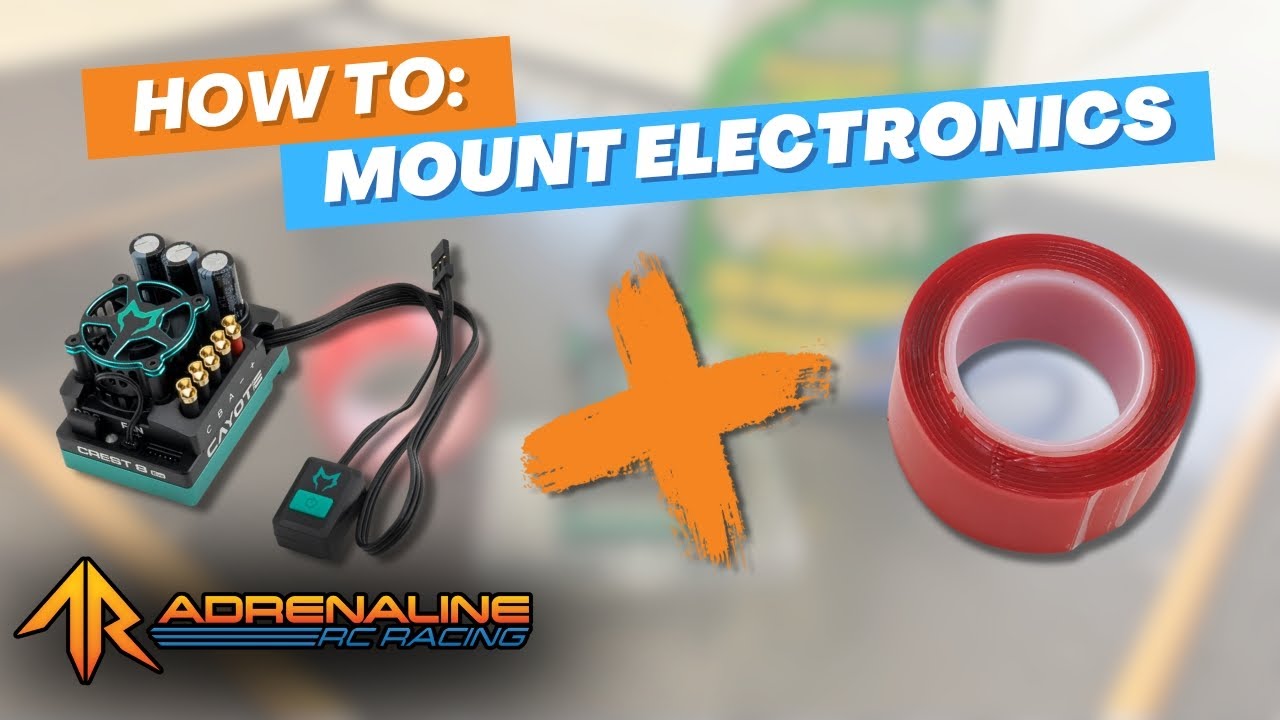
Mounting your electronics correctly is one of those small details that makes a huge difference on the track. Whether you’re running electric buggy, truggy, or just need to mount a transponder, improper mounting can lead to components coming loose, getting caught in gears, or worse—ending your race early.
In this guide, we’re breaking down exactly how to mount your RC electronics properly using double-sided tape, the same method we use in our race cars at Adrenaline RC Racing.
Why Proper Electronics Mounting Matters
In electric RC racing especially, your electronics take a beating. Hard landings, vibration, and constant impacts can loosen poorly mounted components over time. A speed control or transponder coming loose can:
-
Get tangled in drivetrain components
-
Damage wires or solder joints
-
Cause intermittent power issues
-
End your race instantly
The goal is simple: secure mounting with enough cushion to absorb impacts.
What This Method Works For
This process isn’t just for ESCs. You can use the exact same method to mount:
-
Transponders
-
Receivers
-
Power switches
-
Any electronics mounted with double-sided tape
Tools & Supplies You’ll Need
Before you start, gather the following:
-
High-quality double-sided mounting tape
-
Scissors or hobby knife
-
Clean rag or shop towel
-
Degreaser (Simple Green, rubbing alcohol, or brake cleaner)
-
Your electronic component (ESC, transponder, etc.)
Pro tip: Cleanliness is everything. Tape will only hold as well as the surface allows.
Step 1: Clean Both Surfaces Thoroughly
Start by cleaning:
-
The bottom of the electronic component
-
The mounting surface in the car (or mounting plate)
Spray your degreaser onto a rag (not directly onto the electronics) and scrub both surfaces well. If you’re using something like rubbing alcohol or brake cleaner, it will evaporate quickly. If you’re using Simple Green, make sure to wipe everything completely dry.
💡 Any moisture left behind will compromise adhesion.
Step 2: Plan Wire Routing Before You Stick Anything Down
Before applying tape, take a moment to plan how the wires will exit the component:
-
Check for wire channels or cutouts in the chassis
-
Make sure wires won’t be pinched or strained
-
Ensure the ESC orientation works with receiver and battery placement
Once tape is on, repositioning becomes difficult—so plan ahead.
Step 3: Double Up Your Tape for Cushioning
Instead of using a single layer of tape, double it up.
Here’s why:
-
The extra thickness absorbs impact from hard landings
-
It reduces stress on solder joints and internal components
-
It significantly increases longevity of expensive electronics
How to do it:
-
Cut a strip of tape to fit the ESC base
-
Apply the first layer
-
Peel the backing
-
Apply a second layer directly on top
You can add a third layer if you want extra cushion, but two layers is the sweet spot for most race applications.
Step 4: Mount the Electronics
Once your tape is ready:
-
Peel the final backing
-
Carefully position the component in its final orientation
-
Press it down firmly—but not aggressively
You want solid adhesion without stressing capacitors or housings.
Optional step: You can lightly warm the tape with a heat gun to increase tackiness, but it’s not required.
Step 5: Final Check
Once mounted:
-
Gently try to move the component
-
Make sure it’s fully seated with no loose edges
-
Confirm wires aren’t under tension
If it doesn’t move easily, you’re good to go.
This Same Method Works For All Electronics
This isn’t just an ESC trick. Use this same process for:
-
Transponders
-
Receivers
-
Switches
Anywhere you’re relying on double-sided tape, clean surfaces + doubled tape = reliability.
Get the Right Tape & Electronics
We carry the double-sided mounting tape used in this guide, along with high-performance ESCs, right in our online store. If you’re refreshing your electronics or building a new car, make sure you’re setting it up the right way from the start.
👉 Mount it clean. Mount it right. Race with confidence.