
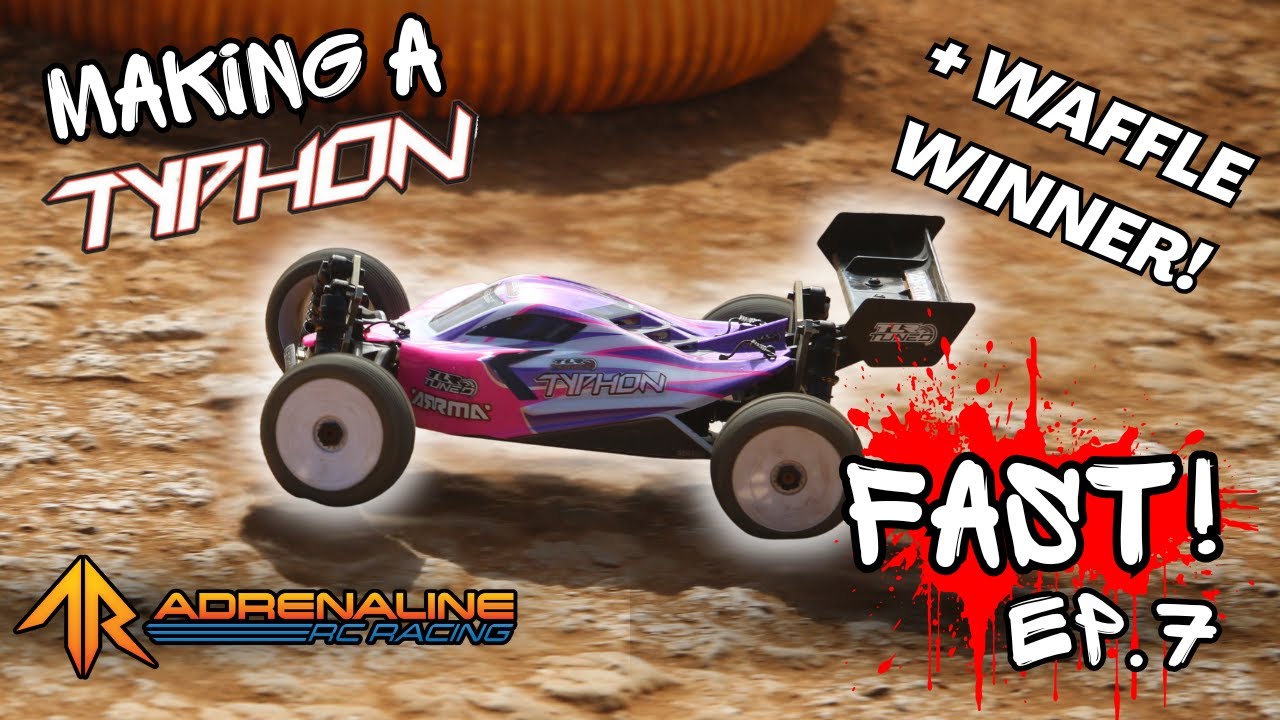
Welcome back to the Adrenaline RC blog! In this installment of our TLR Typhon tuning series, we finally brought the car indoors for its first-ever run on the indoor track. With colder temperatures, a smoother surface, and very different grip conditions compared to outdoors, this session was all about establishing a baseline and making one intentional adjustment to see if we could pick up speed and consistency.
The Game Plan: Baseline First, Changes Second
For this test, the approach stayed simple and controlled:
-
Two freshly charged battery packs
-
A set of well-broken-in Overdose tires
-
Dry indoor track conditions (not peak grip, but consistent)
-
Tires washed with warm water and Simple Green, then sauced each run
The goal was to run the car as-is, collect lap time data, and make one single change before the second pack. With the indoor track being smoother than the outdoor layout, there was a chance the existing setup might work surprisingly well — but expectations were realistic.
Based on the temperature change alone, shock oil adjustments seemed like the most likely direction. However, pistons were intentionally left alone early on to see how much could be accomplished with simpler tuning changes first.
Baseline Results: Solid, But Pushy
The first run confirmed what was expected. The car wasn’t bad — but it wasn’t great either.
-
Best laps landed around 19.4 seconds
-
Roughly one second off the pace
-
Front end showed noticeable push, especially through switchbacks
-
Rotation relied heavily on using suspension “bounce” instead of natural steering
The suspension itself didn’t feel overly stiff. Under hard braking, the front end dove properly and didn’t hang up, and the rear stayed stable thanks to a bit of anti-squat carried over from the outdoor setup. That told us the shock package was likely in the right window.
So instead of touching shocks, the focus shifted to something more geometric.
The Adjustment: Reducing Front Kick-Up
To get more natural front-end bite, we removed some front kick-up using the A-block pill. The idea was to make the car more pointy on entry without forcing rotation through aggressive driving inputs.
Before heading back out, all the basics were rechecked:
-
Front and rear droop
-
Ride height
-
Base setup measurements
Any time suspension geometry is changed, these checks are critical to ensure consistency and avoid false results.
Pack Two: Faster and More Consistent
At first, the difference felt subtle — but once the tires came up to temperature, the improvement was undeniable.
Key takeaways from the second run:
-
Best lap improved from 19.4 to 19.2
-
Picked up two tenths on hot lap
-
Lap times became far more consistent
-
Car felt more direct and predictable on entry
-
Front end had noticeably more natural dig
While this wasn’t a massive leap in outright speed, the consistency gain was the real win. The car stayed locked into that mid-to-low 19-second range much more reliably, which is exactly what you want when tuning.
What This Means for the Typhon
Is the Typhon suddenly a top-tier indoor pro buggy? No — but that’s not the point of this series.
With minimal changes, the car continues to get faster every time it hits the track. For a platform that isn’t designed as a full-blown race buggy, running around 19.2 seconds indoors is solid progress. There’s still plenty of tuning left on the table, including:
-
Sway bar changes
-
Shock position adjustments
-
Steering rack and plate options
-
Additional geometry tweaks
Each change will continue to be tested one at a time to keep results clear and repeatable.
Final Thoughts
This session was a win. One controlled change delivered measurable improvements in both speed and consistency — exactly how tuning should work. It’s encouraging to see the car respond logically to adjustments and continue moving in the right direction.
If you’re following along with this series or building a Typhon yourself, this is a great reminder that small, intentional changes matter, especially when you track results carefully.
And if you’re interested in building one of these yourself, we’ve got the Typhon roller available so you can install your own electronics and tune along with us.
Thanks for reading, thanks for watching, and we’ll be back soon with the next step in the tuning journey.