
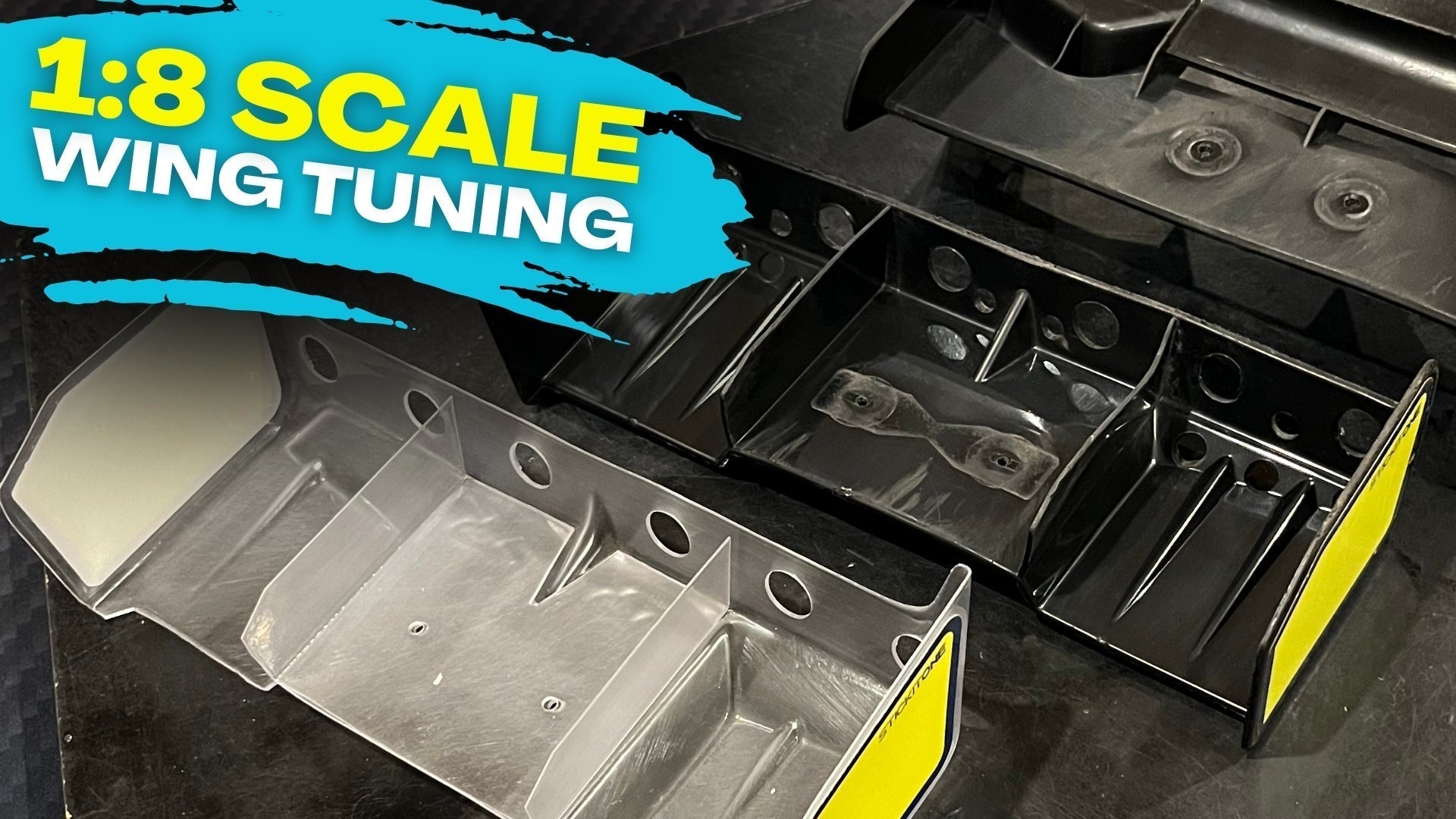
When it comes to high-performance RC racing, every detail counts—and one often-overlooked component that can make a massive difference in handling is your wing setup. In this post, I’m breaking down three of the most popular wing options from JConcepts—the Razor Wing (Plastic), Razor Wing (Lexan), and the F2I Wing—and sharing my personal experience tuning with each one.
Razor Wing (Plastic): The Go-To Standard
If you’ve been to any major race recently, you’ve seen this wing on everyone’s car. The standard plastic JConcepts Razor Wing has taken the wing game by storm thanks to its balanced performance and predictability.
What makes it a standout?
-
Excellent rear grip and comfort
-
Predictable handling on both high-speed and tight technical tracks
-
Side dams and wicker height help plant the rear end
Tuning Tip: Out of the package, JConcepts marks dimples on the Wicker—drill these out. Without them, the wing can trap air, making your rear end feel bogged down. Drilling holes allows air to escape more freely, lightening up the rear and improving flow, especially in windy conditions. I personally ream out both the main dimples and smaller vent holes on each side of the center channel for added stability in the air.
Razor Wing (Lexan): Lightweight Performance Upgrade
The Lexan Razor Wing is the latest addition to JConcepts’ lineup and a personal favorite of mine. I’ve been running it on my E-Buggy, Truggy, and Nitro Buggy at events like Wicked Weekend—and it’s quickly become my go-to.
Why I love it:
-
Significantly lighter than the plastic version
-
Same Razor design and dimples for tuning
-
Improved off-power rotation
-
Reduces high rear weight for a lower center of gravity
Tuning Tip: Pay attention when cutting your Wicker height. The wing has both a high and low Wicker guide line—each corresponding to a different set of ream-out holes. If you cut high and ream the lower row, you won’t have enough material between the holes and the Wicker.
This wing is perfect if you want your car to rotate a bit more through mid-corner exits or feel more fluid on open, sweeping layouts.
F2I Wing: Old-School Edge & Wind Defense
While not as popular as it once was, the JConcepts F2I Wing still holds a valuable place in your tuning toolbox. It’s a more traditional-style wing with a lower Wicker and smaller side dams.
Where it shines:
-
Best on tight indoor tracks where you want the car to rotate quickly
-
Ideal for windy outdoor conditions—less drag in the air
-
Helps reduce the “parachute” effect that can make jumps unpredictable
I still pull out the F2I wing when I want the car to feel snappier, especially on smaller layouts like my home indoor track at Adrenaline RC. In heavy wind, it’s also a lifesaver—offering much more consistent jumping behavior compared to the Razor Wing.
Final Thoughts: Which Wing Should You Choose?
Each of these wings brings its own strengths:
-
Plastic Razor Wing: The “do-it-all” option with strong grip and predictability
-
Lexan Razor Wing: A lightweight upgrade that frees up rotation and lowers CG
-
F2I Wing: A niche tuning option for tight tracks or heavy wind
If you haven’t already, I highly recommend experimenting with different wing styles based on your track layout and conditions. Just like tires or shock oil, wing tuning is a game-changer for dialing in your setup.
Thanks for reading! If you found this post helpful, be sure to leave a comment with your favorite wing setup, and don’t forget to subscribe to Lee Setser's YouTube channel for more RC tuning tips and product breakdowns.