
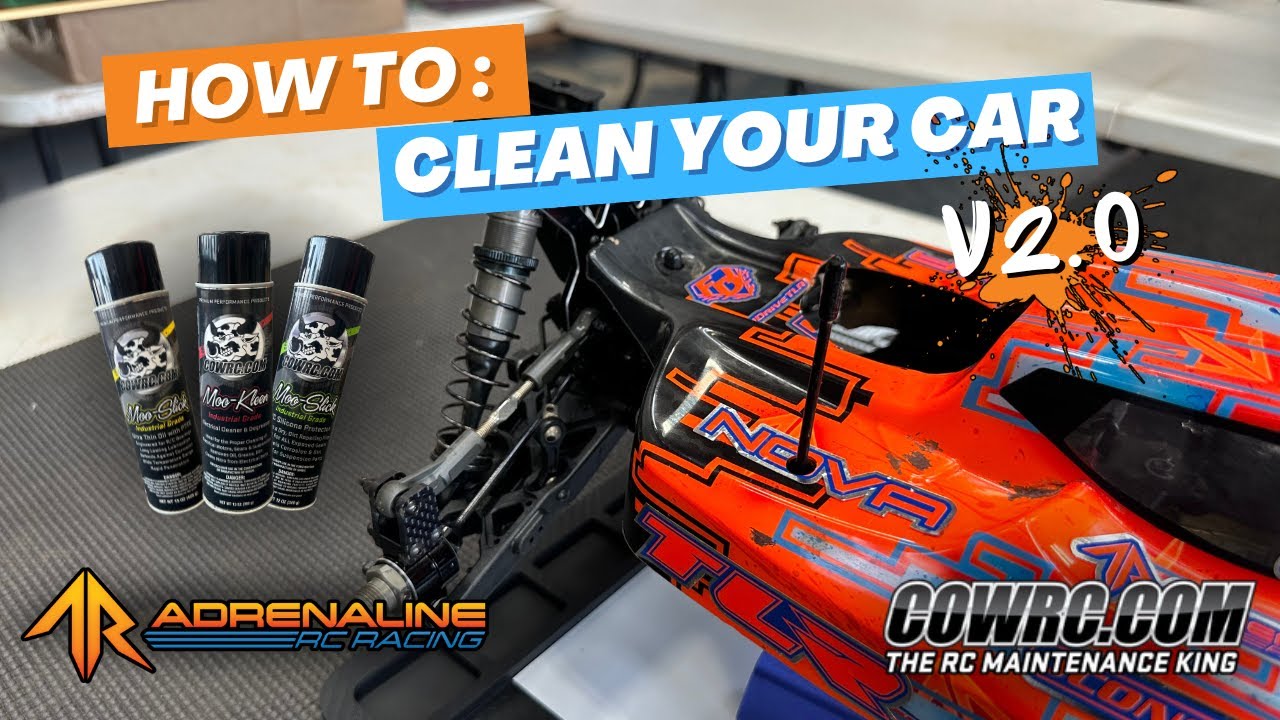
Keeping your RC car clean isn’t just about appearance — it’s one of the most important things you can do to improve performance, extend component life, and ensure reliability at the track. Dirt, dust, and debris can cause premature wear on bearings, drivetrain components, and electronics if left untreated.
In this guide, we’ll walk through the complete process of cleaning your RC car properly, including how to clean plastics, bearings, drivetrain parts, and even electronics safely.
Whether you race competitively or just enjoy weekend bashing, this process will keep your car running at its best.
Why Cleaning Your RC Car Matters
Regular cleaning provides several important benefits:
-
Extends the life of bearings and drivetrain components
-
Improves drivetrain efficiency
-
Prevents dirt buildup that can cause premature wear
-
Makes maintenance easier and faster
-
Helps identify worn or damaged parts early
-
Keeps your vehicle looking race-ready
A clean car is also easier to work on, and routine maintenance becomes much more efficient when everything is free of dirt and grime.
Tools and Supplies You’ll Need
Before getting started, gather the proper supplies. Here’s what you should have ready:
Cleaning supplies:
-
Microfiber towels
-
Air compressor (recommended)
-
Electronics cleaner (RC safe)
Optional but helpful:
-
Spray straws for precise application
Using proper RC-specific cleaners is important because harsh cleaners can damage plastics, bearings, and electronics.
Step 1: Disassemble Key Components
Start by removing major assemblies that need cleaning, such as:
-
Wheels and tires
-
Rear or front clip
-
Differential (if needed)
-
Shocks
-
Wing
You don’t always need to fully tear down the entire car, but separating major components allows you to clean much more effectively.
Organizing your screws on a magnetic pit mat will help prevent losing hardware during the process.
Step 2: Apply Cleaner and Agitate Dirt
Once your parts are ready:
-
Spray cleaner onto the dirty components
-
Allow it to sit for 2–4 minutes to break down dirt and grime
-
Use brushes to gently agitate surfaces
Focus on areas where dirt builds up most:
-
Suspension arms
-
Shock towers
-
Gearboxes
-
Chassis corners
-
Tight crevices
The goal is to loosen dirt so it can be removed easily.
Step 3: Blow Off Dirt with Compressed Air
After letting the cleaner work, use compressed air to remove loosened dirt and excess cleaner.
This step is extremely effective and helps remove debris from tight areas that brushes can’t reach.
You’ll immediately notice a huge improvement in cleanliness.
Step 4: Apply Silicone Protectant
Once the parts are clean and dry, apply a silicone protectant to plastic components.
Benefits of silicone protectant:
-
Restores shine
-
Protects plastics from wear
-
Helps prevent dirt from sticking in the future
-
Makes future cleaning easier
Allow the protectant to dry naturally or wipe lightly with a microfiber towel if needed.
Step 5: Lubricate Bearings
Bearings are critical to performance and should always be lubricated after cleaning.
To properly lubricate bearings:
-
Apply a small amount of bearing oil
-
Spin the bearing to distribute oil evenly
-
Avoid over-lubricating
Proper lubrication ensures smooth rotation and reduces friction.
Step 6: Grease Drivetrain Components
Apply grease to drivetrain components such as:
-
Ring and pinion gears
-
Differential components
-
Metal-to-metal contact areas
This reduces wear and ensures smooth power transfer.
Step 7: Clean Electronics Safely
Electronics often collect dirt, especially around the speed controller and motor.
Use an electronics-safe cleaner and:
-
Spray lightly on dirty areas
-
Use a brush if needed
-
Allow electronics to dry completely
Always verify electronics are dry before powering the vehicle back on.
When done correctly, electronics cleaners are safe and effective.
Step 8: Reassemble Your Vehicle
Once everything is clean, protected, and lubricated, reassemble your vehicle.
At this point, your RC car should look, feel, and perform like new.
Results: What to Expect After Cleaning
After completing this process, you’ll notice:
-
Smoother drivetrain performance
-
Cleaner, better-looking components
-
Improved reliability
-
Easier future maintenance
Regular cleaning is one of the easiest ways to protect your investment and improve performance.
How Often Should You Clean Your RC Car?
Cleaning frequency depends on usage:
Race vehicles:
Clean after every race day
Off-road bashers:
Clean after every few sessions
Light use:
Clean as needed, especially when dirt buildup is visible
Consistency is key.
Final Thoughts
Cleaning your RC car is a critical part of proper maintenance. Using the right products and following a systematic process ensures your vehicle performs at its best and lasts longer.
Regular cleaning helps:
-
Protect your investment
-
Improve performance
-
Reduce maintenance costs
-
Keep your car race-ready
If you want your RC car to perform like new, make cleaning part of your routine.