
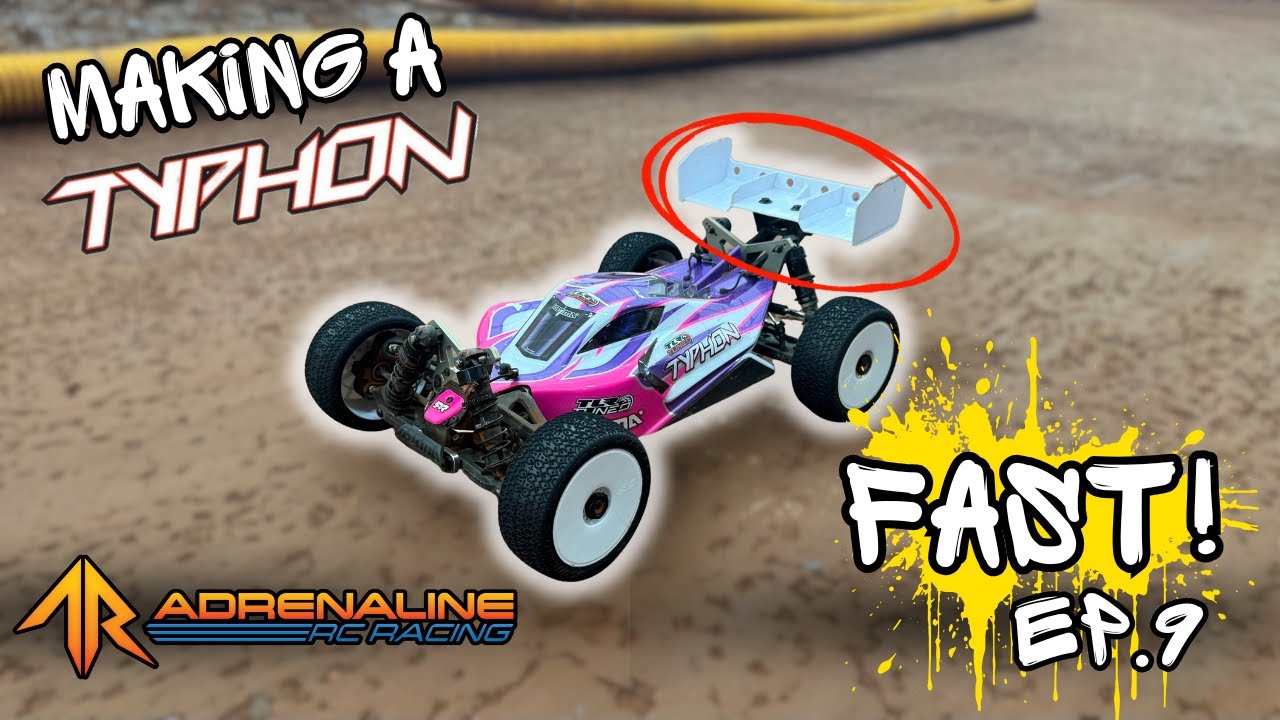
When you’re chasing lap time on an indoor dirt track, it’s easy to jump straight into major setup changes — geometry, toe, anti-squat, sway bars. But sometimes the smartest move is starting with the most basic adjustment possible.
In this week’s video on the Adrenaline RC YouTube channel, we continued dialing in our TLR Tuned Typhon, focusing on one goal: freeing up the rear end to improve rotation and overall consistency.
Quick Recap: Where We Left Off
Last week, we experimented with a front sway bar change. While it did help, the gains weren’t as significant as expected. The car still had a lot of rear grip, which sounds good on paper — but in reality, too much rear grip can slow rotation and kill corner speed.
Even so, the Typhon showed promise:
-
Broke into the 18-second range once with an 18.7
-
Consistently ran low-to-mid 19s
-
Clearly had more potential left in it
Instead of diving straight into rear geometry changes, we decided to take a simpler approach first.
The Test: Swapping to a Low Downforce Rear Wing
Before touching toe, anti-squat, or sway bars, we made a single, basic change:
rear wing downforce.
The stock wing appears to generate quite a bit of rear downforce, which can plant the rear but also make the car feel stuck. To counter that, we swapped to the low downforce Razor Wing from JConcepts, a wing that’s been a go-to on race cars for years.
Test Setup Highlights
-
No baseline run (we already know how the car feels)
-
Broken-in Dirt Web 2 tires (two runs on them)
-
Green FDJ tire sauce
-
Ride height checked and unchanged
-
Focus was feel and consistency, not outright lap time
The idea was simple:
👉 If the wing alone could free up the rear, it would tell us a lot before making more invasive changes.
On-Track Results: More Flow, Less Effort
What Changed
-
The rear end rotated more easily
-
The car flowed through sweepers better
-
Turn-in improved, especially off the main straight
-
Required less effort to drive quickly
While we didn’t immediately go faster, something important happened:
Lap time consistency improved significantly.
There was a stretch of 6–9 consecutive laps all landing in the 19.3–19.4 range, even while talking and not pushing aggressively. That’s a big deal.
Instead of “working” the car or forcing speed out of it, the Typhon started to:
-
Settle into a natural rhythm
-
Reward smoother driving lines
-
Maintain pace without overdriving
That’s exactly what you want heading into longer mains.
Why Consistency Matters More Than One Fast Lap
It’s easy to get excited about a single fast lap — like the 18.7 from last week — but that doesn’t always translate into race results.
This wing change reinforced an important lesson:
A car that’s easy to drive consistently will almost always outperform a car that’s fast but demanding.
With the Razor Wing:
-
Mistakes were reduced
-
Lines became more repeatable
-
Corner speed improved without added aggression
-
The car stayed within its comfort zone
Over the length of an A-Main, that’s huge.
What’s Next: Building Speed on a Stable Platform
Now that the Typhon is flowing better and delivering consistent lap times, the next step is layering speed on top of stability.
Upcoming changes will likely include:
-
Rear toe adjustments to increase rotation
-
Revisiting sway bar balance
-
Anti-squat tuning to maintain stability on throttle
The goal is a car that:
-
Rotates quickly off-power
-
Stays planted when getting back on throttle
-
Feels “point and shoot” without being twitchy
In short: fast and forgiving.
Final Thoughts
This test didn’t deliver a dramatic headline lap time — but it delivered something arguably more important: confidence and consistency.
-
Freed up the rear end
-
Improved flow through the track
-
Tightened lap time grouping
-
Made the car easier (and more enjoyable) to drive
That’s real progress.
We’ll link the exact wing used below, along with hole placement details once confirmed. If you’re running a Typhon indoors and fighting rear grip, this is an easy, affordable change worth trying before diving deeper into setup changes.
As always, thanks for following along — and we’ll see you in next week’s tuning session as we keep pushing this car faster. 🏁