
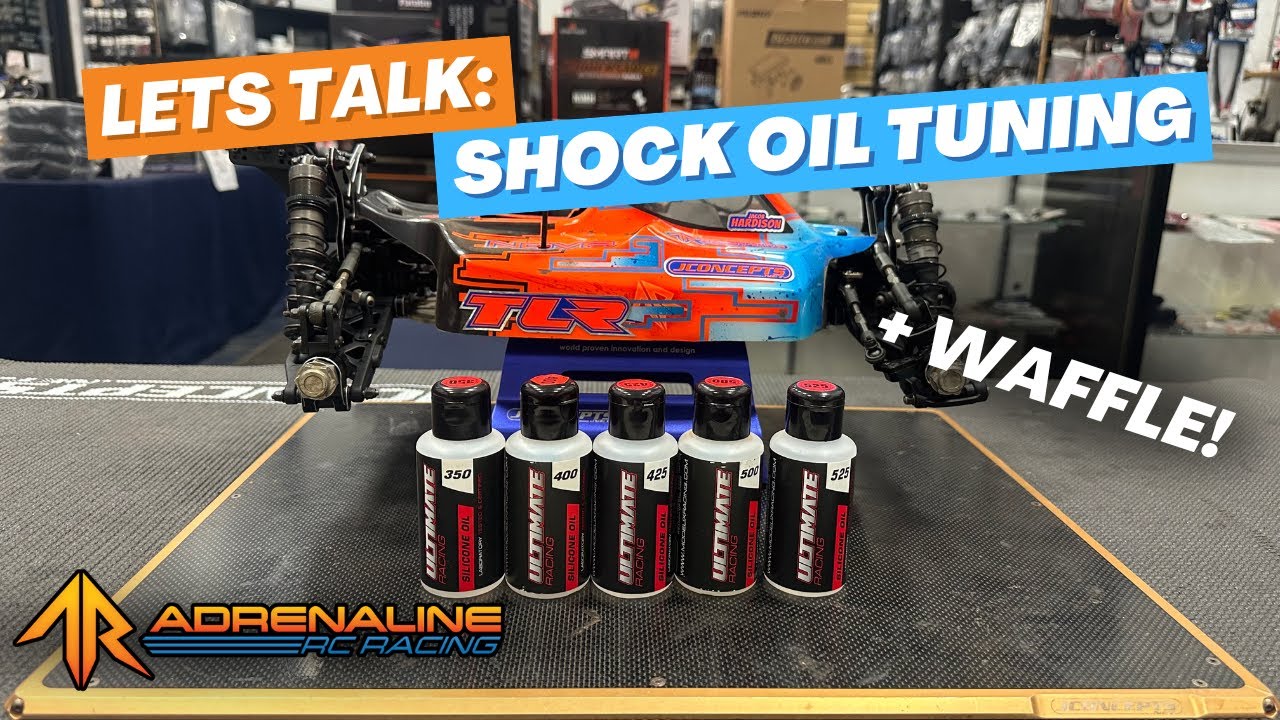
If you’ve been dialing in your setup but still can’t seem to get that perfect feel on the track, chances are it’s time to fine-tune your shock oil. In the latest episode of our “Let’s Talk” series, Jacob Hardison breaks down everything you need to know about shock oil tuning — from how it affects your car's behavior to what adjustments you should make for different track conditions.
Whether you’re a beginner or a seasoned racer, this guide will help you better understand how to get the most out of your suspension.
📌 Why Shock Oil Matters
Shock oil plays a key role in how your RC car handles weight transfer, absorbs bumps, and responds to traction changes. It directly impacts:
-
Squat and dive
-
Roll resistance
-
Steering response
-
Overall grip
Simply put, adjusting your shock oil can either stabilize or unsettle your car — so it’s important to know how to tune it for the surface you're racing on.
🔧 Soft vs. Stiff Shock Oil: What’s the Difference?
-
Softer Oil: More reactive, better weight transfer, increased grip. Ideal for low-grip or bumpy tracks.
-
Stiffer Oil: Slower movement, more stable, less roll and dive. Works well on high-grip or smooth surfaces.
⚠️ Pro Tip: Go too soft, and your car may “waggle” or feel unstable in the rear. Go too stiff, and you risk traction rolling, especially on high-grip tracks.
🛞 Front vs. Rear Shock Oil Behavior
-
Rear:
-
Softer = More grip and weight transfer
-
Stiffer = Less grip but more stability
-
-
Front:
-
Softer = More dive and steering response
-
Stiffer = Smoother steering, especially useful on high-grip tracks
-
Keep in mind — the front has more complexity since it affects both up/down movement and steering.
🏁 Track Conditions & Shock Oil
Shock oil setup isn’t one-size-fits-all. Here’s how to adjust for common track variables:
-
Grip Level:
-
Low Grip → Softer oil
-
High Grip → Stiffer oil
-
-
Track Surface:
-
Bumpy → Lighter oil to allow quick shock response
-
Smooth → Heavier oil for stability and flow
-
-
Temperature:
As ambient temps change 10–15°F, increase or decrease oil by ~50 CST.-
Morning: Cooler = Lighter oil
-
Midday: Warmer = Heavier oil
-
Evening: Cooler again = Lighter oil
-
🧪 Finding Your Baseline
Jacob recommends starting with 500 CST front and rear or something in that midrange. From there, adjust in 50–100 CST increments depending on track feel, temperature, and grip.
🔍 Talk to fast locals at your track for a good baseline! Everyone’s setup will vary depending on pistons, springs, and driving style — but having a starting point helps you avoid getting “lost in the sauce.”
🏁 Final Thoughts
Shock tuning can feel overwhelming, but by understanding the role of oil weight, track surface, and temperature, you’ll be better equipped to make smart adjustments on race day. Keep experimenting within your preferred range, and use each race day to fine-tune what works best for you.
📺 Haven’t watched the video yet? Check it out on YouTube and don’t forget to subscribe for more tuning tips, build guides, and race footage.
💬 Got questions? Drop a comment on the video or message us on Instagram @adrenalinercracing — we’re here to help you go faster!