
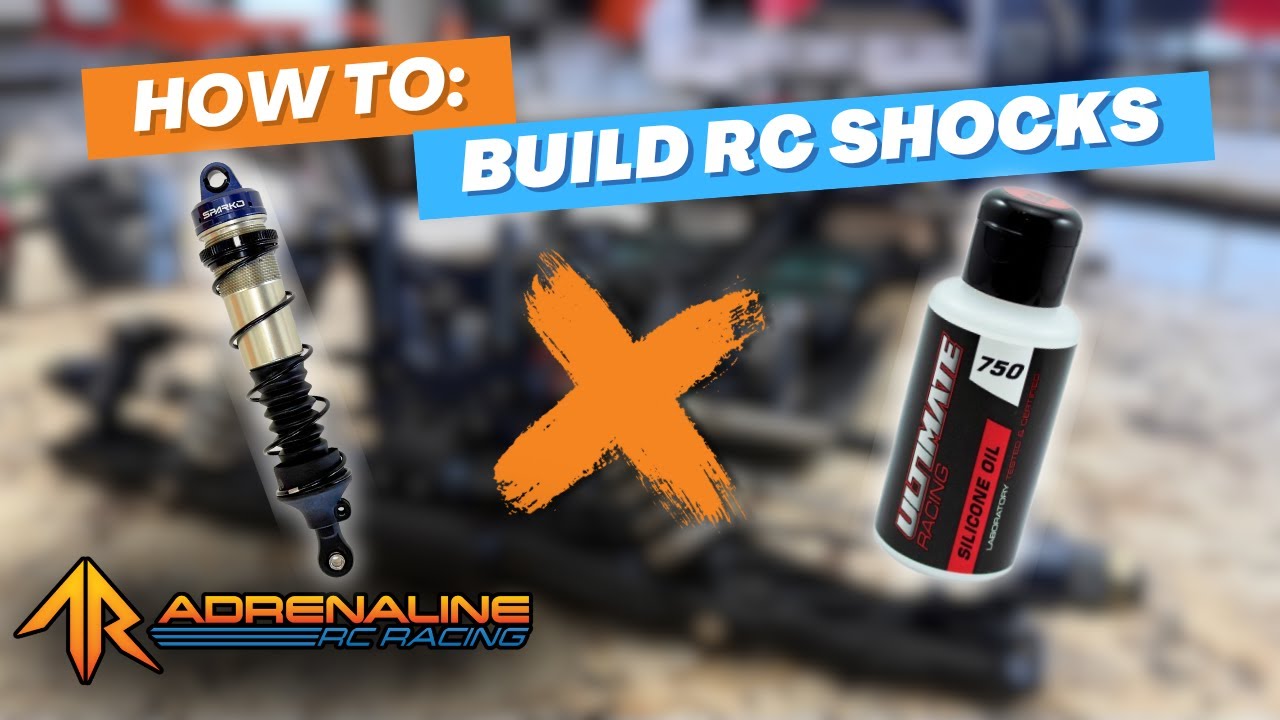
If you’ve ever built shocks and ended up with leaks, inconsistent rebound, or a shock that just feels off, you’re not alone. Shocks are one of the biggest performance upgrades you can dial in on your RC car — and the difference between “good enough” and “race-ready” comes down to the details.
In our latest Adrenaline RC YouTube video, we’re continuing our mini-series where we break down the most important parts of building a competitive RC setup. A few weeks ago we covered how to build a diff like a pro, and today we’re going through the complete process of building an RC shock like a pro from start to finish — including the fill + bleed process and some small tricks that make a huge difference at the track.
We’re building shocks for a Sparko build we’re putting together for our buddy Anthony Donley, so we’ll be working with a real shock from his setup and walking through the entire build process step-by-step.
Let’s get into it.
Big Announcements: Adrenaline Servos + Cayote Motors Are Here 👀
Before we dive into shock building, we had two major announcements:
✅ Adrenaline RC Racing Servo — Our First In-House Product
We officially launched our first in-house Adrenaline RC product — our very own Adrenaline RC Racing Steering Servo.
This servo is a full aluminum case unit with stout specs for 1/8-scale vehicles, and it’s something we’ve already been testing and running with confidence. For $100, it’s one of the best performance-per-dollar servos out there for serious racers.
It works great in:
-
1/8-scale (perfect match)
-
1/10-scale (overkill, but in a good way 😄)
If you want to support the brand and upgrade your steering, it’s available now on our website.
✅ Cayote Motor Line Officially Released
Cayote has officially released their motor lineup, and we’ve already had the chance to run a full Cayote electronics setup on track:
-
Cayote Motor
-
Cayote Batteries
Even in cold weather with minimal track time, the performance was awesome. On two 6800mAh packs, we were getting around 13–14 minutes of runtime on a break-in pack — and as the drivetrain frees up more, we expect that runtime to improve even more.
We’re getting everything ready for Motorama, and Cayote motors should be hitting our website very soon.
RC Shock Build Like a Pro: Tools + Parts Setup
Just like building diffs, shock building goes way smoother when you lay everything out in order.
Before you begin, organize:
-
Shock body
-
Shock shaft
-
Piston + hardware
-
O-rings + washers
-
Lower cap
-
Collar + collar O-ring
-
Shock boot
-
Eyelet + pivot ball
-
Shock cap + bleeder screw
- Shock Stand
- Shock Shaft Pliers
- 1.5mm Hex Driver
✅ Pro Tip: Layout everything in the order it goes into the shock. It prevents mistakes and makes sure you don’t miss any parts.
Step 1: Install the Piston on the Shock Shaft (Orientation Matters)
First up is the shock shaft + piston.
If you’re using a tapered piston, the orientation is critical:
✅ Taper goes DOWN.
Never install a tapered piston with the taper facing up.
Once the piston is installed:
-
Add your washer under the piston
-
Thread the top nut on
-
Tighten it down using shock shaft pliers
Why this matters
You want the piston tight enough that it doesn’t spin freely. If it spins inside the shock, it can bind, go crooked, and even seize inside the shock body — which is the last thing you want on race day.
Step 2: Lightly Oil the Shaft and Slide It Into the Shock Body
Next, add a small amount of shock oil to the shaft to lubricate it before feeding it through the bottom of the shock body.
Some kits recommend building the lower seal pack first, but we prefer installing the shaft first because:
✅ It helps guide everything into place square and straight
✅ Reduces the chance of crooked seals or binding
Step 3: Build the Lower Shock Seal Pack (O-Rings + “Top Hats”)
This is one of the most important areas for long-term smoothness and leak prevention.
On this shock, the lower stack order is:
-
Top hat washer (small side toward the shock body)
-
O-ring (with O-ring grease)
-
Flat washer
-
O-ring (greased)
-
Top hat washer (small side facing down)
Then thread the lower shock cap on.
Grease matters
Using O-ring grease helps:
-
prevent torn O-rings
-
improve smoothness
-
reduce friction on the shaft
-
improve longevity
✅ If it feels smooth with no binding after threading the cap on, you’re doing it right.
Step 4: Install the Collar O-Ring (Don’t Mess This Up)
This is one of those “small detail, huge impact” steps.
The collar O-ring must sit INSIDE the collar — not outside of it.
If it’s outside, the collar can loosen during a run, changing ride height mid-race (which can completely throw off handling).
✅ A little oil or grease helps it thread on smoothly.
Step 5: Shock Boot First — Always
Before you install the eyelet:
✅ Slide the shock boot on first.
If you forget and try to install it after the eyelet… you already know how that goes. 😅
Step 6: Thread on the Eyelet (Leave a Little Thread Showing)
A lot of people thread the eyelet all the way up — but we recommend leaving just a little thread showing on the shaft.
This helps ensure you have:
-
proper droop range
-
consistent feel shock-to-shock
-
enough adjustment without limiting travel
On 1/10 scale this can be more measurement-critical, but on 1/8 scale you’re typically setting droop using droop screws.
Step 7: Fill the Shock With Oil + Pump Slowly
Now that the shock is assembled, it’s time for the fill.
Fill the shock all the way to the top, then slowly pump the shaft.
✅ Pumping helps release trapped air bubbles, especially near the bottom.
Important: go slow
If you pump too fast and a large bubble releases suddenly, you’re going to spray oil everywhere and create a mess.
Once you don’t feel air at the bottom anymore:
-
top off the oil
-
let it sit in the stand
-
allow bubbles to rise naturally
At this point, it becomes a waiting game.
Converting a Bladder Shock into an Emulsion Shock (Easy Trick)
In this build, we didn’t have emulsion O-rings — only bladders — so we used a simple method to convert it into an emulsion setup.
Here’s how we did it:
-
Take the bladder
-
Carefully cut the center out
-
Leave the thicker outer ring intact
This effectively turns it into a seal ring rather than a true bladder.
✅ Important note: Do NOT cut the thick outer ring.
That ring is what holds the shape and seals properly.
One warning:
If your shock cap does not have a bleeder screw, don’t do this mod — you need the bleeder screw to bleed the shock correctly.
Shock Cap Setup Tip: Face the Bleeder Screw Inward
This isn’t required, but it’s a smart habit:
✅ Install shocks so the bleeder screw faces toward the inside of the car, not the outside.
Why?
-
Less dirt gets packed into the screw head
-
Easier maintenance
-
Less chance of stripping screws during rebuilds
Final Bleed Process: The “Second Bleed” Makes a Big Difference
Once the shock is bled and topped off, it’s time to close it down.
Step-by-step:
-
Install the cap slowly
-
Keep the bleeder hole facing up (air rises)
-
Let oil bleed out while wiping with a rag
Then comes the part a lot of people skip:
✅ Pump the shock around 20 times
✅ Leave the shock fully extended
✅ Remove the bleeder screw
✅ Slowly compress the shock again to push out excess pressure/oil
✅ Re-tighten the bleeder screw (don’t over-tighten)
Why the second bleed matters
It prevents your shock from becoming over-pressurized (aka “hydrolocking”) under race conditions — and keeps performance more consistent through a run.
Final Step: Install Spring + Spring Cup (And You’re Ready)
Once the bleed is complete:
-
install the spring cup
-
install the spring
-
snap everything into place
And you’re done ✅
At this point the shock is ready to go straight onto the car — and yes, you’ll repeat the same process for the other three shocks.
Final Thoughts: Smooth Shocks = Faster, More Consistent Laps
Shock building isn’t just about putting parts together — it’s about consistency, smoothness, and getting repeatable results so your car feels predictable in every corner.
If you take your time with:
-
piston orientation
-
seal stack order
-
proper lubrication
-
slow bleeding
-
the second bleed process
…you’ll end up with shocks that feel race-ready every time.
Questions? Drop Them Below 👇
If you have any questions about shock building, emulsion vs bladder setups, piston tuning, or oil weights, leave a comment — we’ll do our best to help you out.
And don’t forget:
-
✅ Check out the Adrenaline RC Racing Servo
-
✅ Stay tuned for Cayote Motors coming to the website soon
Thanks for watching, and we’ll see you next week for another new video!